

Too Hot to Grill
If you can’t stand the heat, get back in the kitchen…?
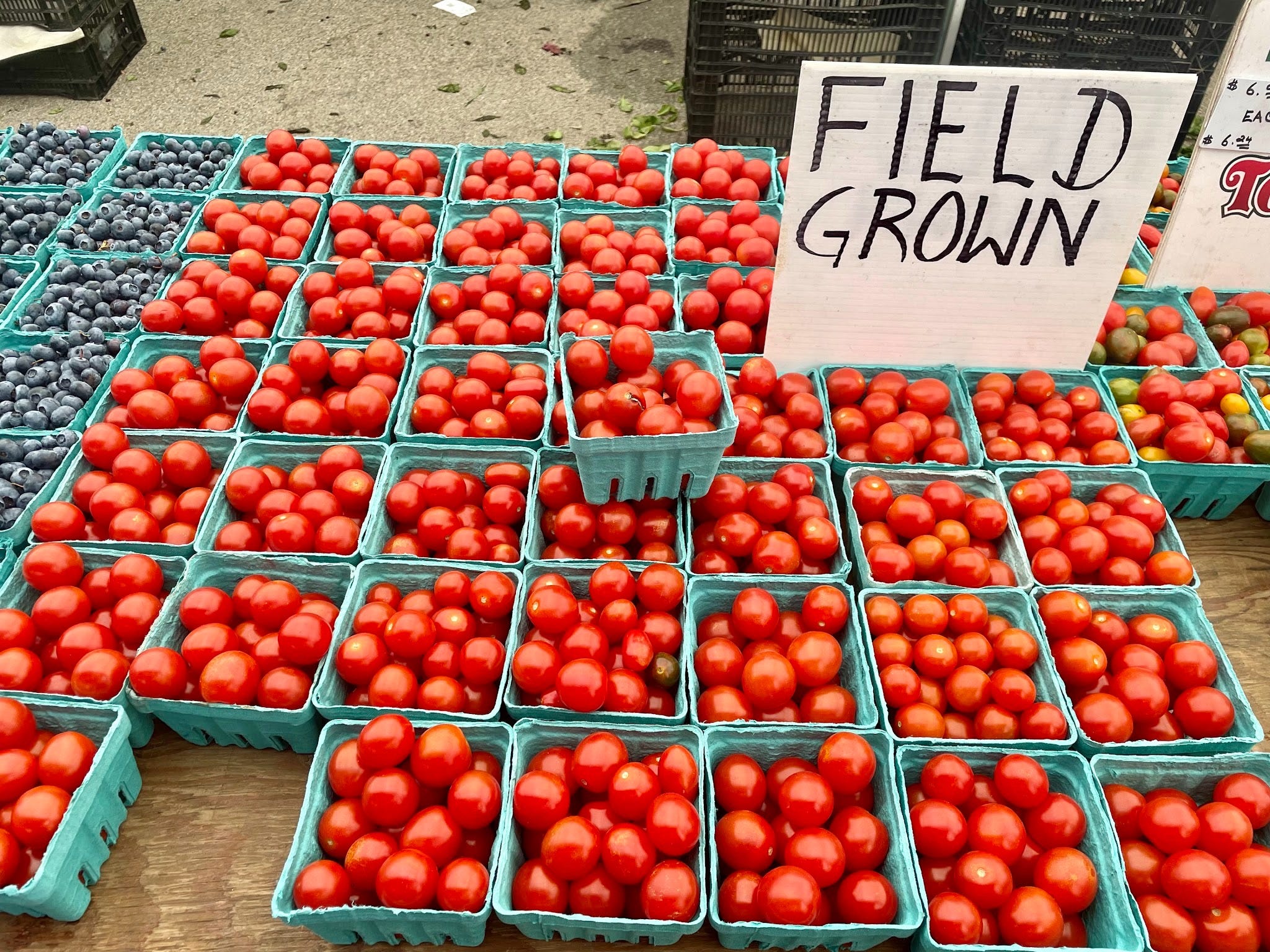
My idea of a perfectly acceptable summer meal.
Summer is my favorite season. I like hot weather and doing hot-weather things, like swimming, eating loads of watermelon, and generally lazing about. I was born in the summer, and in the South, no less. So I am wired for heat and humidity. But even I have my limits. And when it comes to meals, that limit is this: no standing over a grill in extreme heat.
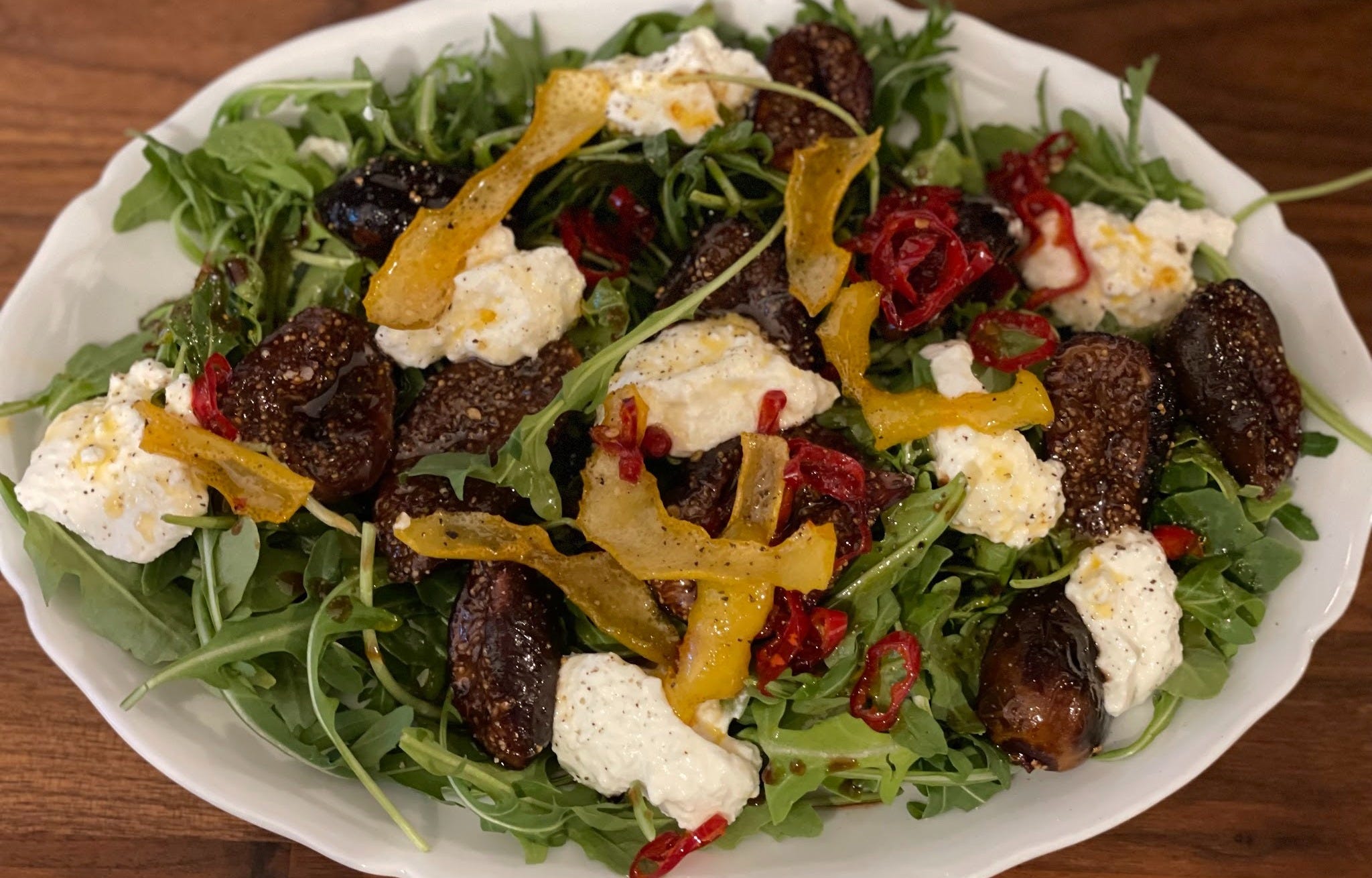
An elevated summer salad made by my colleague Paul, whose ideas are heavily featured in this post—and who has not yet invited me over for dinner.
Summer yields such tasty produce that often food doesn’t need to be cooked. I made three batches of gazpacho in July. I love a good salad for dinner. And honestly, I don’t even need to fuss with a salad. I could just eat a pint of tomatoes and a piece of cheese and call it a night. (And yes, there is an outbreak of cyclosporiasis that is sickening people, so it is important to take care and be informed. But you can still eat your favorite summer produce.)
But two big handfuls of tomatoes won’t work as a meal for my kids, who are even more active in summer and need more fuel than usual, not to mention protein. So, summer still calls for cooking—even if we prepare food to eat cold later. I also want to minimize the heat I create indoors while doing so, especially since I live in an old house where window air conditioners are working hard to keep things cool.
What are the best strategies for taking summer cooking indoors without overheating your home—or yourself? I quizzed my CR colleagues for their tips and tricks.
Quick-cook in a wok.
Cooking everything in one pan means you don’t have to have multiple burners going. A good ol’ stir-fry can be done on one burner, relatively quickly, says Paul Hope, a CR editor who is also a trained chef (see salad above). A good-sized wok is large enough to hold all the elements, but a stainless steel pan works too, since stainless pans usually have an aluminum core or base that heats quickly, Paul tells me.
Also key to not overheating: On an electric stove, match the pan to the size of the burner—a small pan on a large burner means more heat escaping into your kitchen. And use the exhaust fan; it can pull some of the heat from the stove out of the kitchen.
Do a whole meal in the air fryer or toaster oven.
Air fryers cook quickly and do a good job of containing heat within the appliance, says Breann Chai, who leads air fryer testing at CR. You can even cook a whole meal in it, from start to finish (including dessert).
As you probably know, air fryers aren’t actually frying food. They’re mini convection ovens that circulate air quickly. So yes, they are great for crisping things up, if you want a little crunch to your Brussels sprouts or are heating up a samosa. But you can cook most anything you want in there, and even just use it to keep food warm: chicken thighs, corn on the cob, fish, asparagus.
Something to be mindful of: Many air fryers have a small capacity, says Breann, “so you might have to do multiple rounds of cooking”—but also check out large models that score well in CR’s tests.
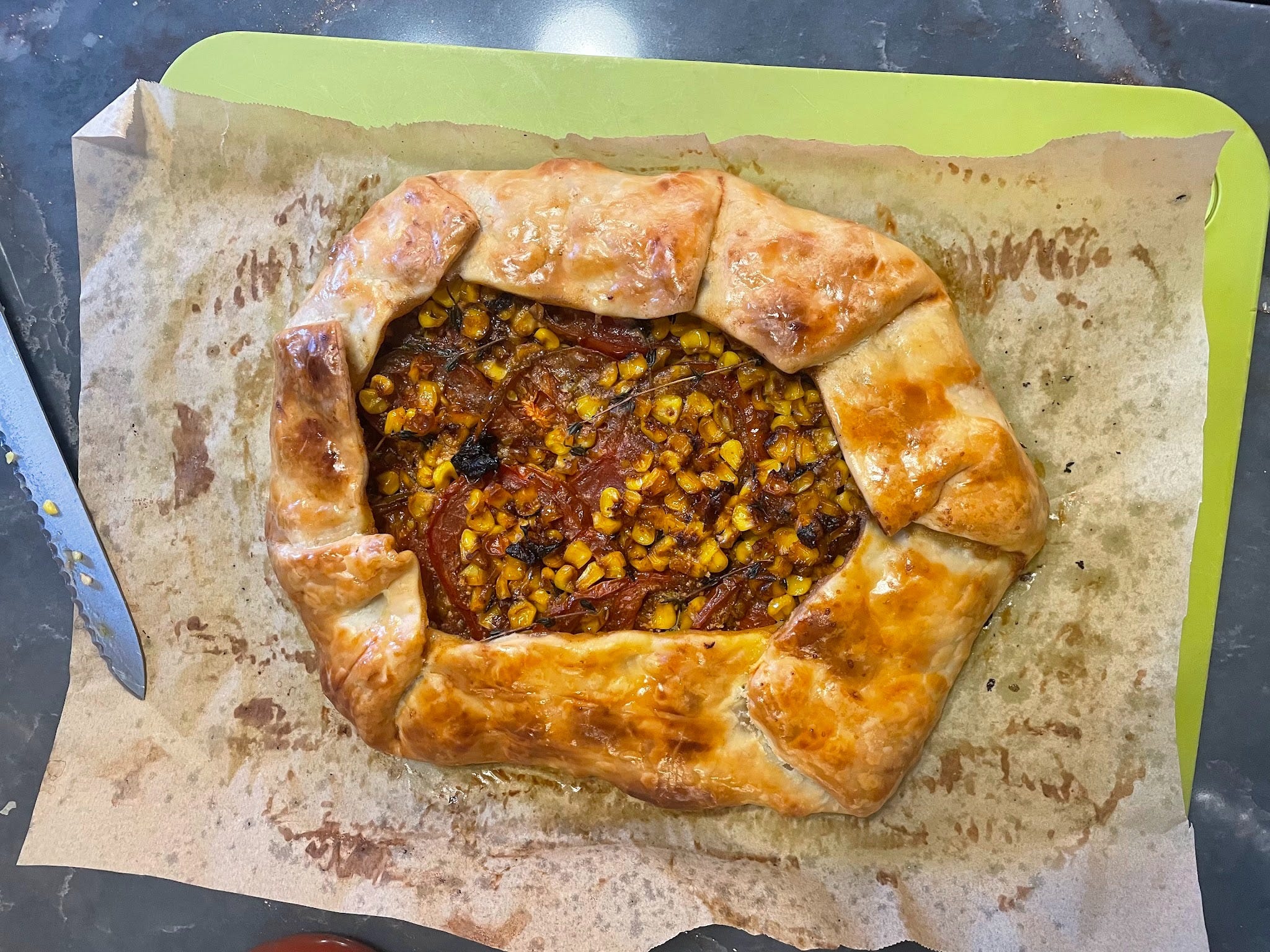
Tomato-corn galette made in my toaster oven: We ate the whole thing in one night.
If you don’t have an air fryer, you can use other small appliances. A multi-cooker can be useful on a hot day—especially on the pressure-cooker setting—because it can be faster than cooking on the stove. Paul makes brown rice in large batches in his pressure cooker, reducing the cooking time by more than half; then he vacuum-seals and freezes family-size portions to defrost when he needs them.
I use my toaster oven for roasting and baking. So does my colleague Althea Chang-Cook, who covers toaster ovens for CR. True to her last name, Althea loves to cook. She’ll make her own pizza, brownies, and fish in the toaster oven, she says.
Toaster ovens still give off some heat, but nowhere near as much as a regular oven, says Althea. I used mine recently to make the summer galette above.
Now’s the time to use that portable induction burner.
Paul has one, and it comes in handy. “I don’t think I would send somebody out to buy a plug-in induction burner just because it was hot outside for a few days, but I think it’s a great thing to have,” he says.

Paul often finds himself cooking for a crowd, so this extra burner earns its keep.
An induction cooktop, whether it’s a portable burner like Paul’s or your basic four-burner stove, doesn’t throw off as much heat as a gas burner, and it won’t stay warm for as long as an electric radiant burner, which continues to shed heat long after cooking.
“These portable burners are great for this particular purpose, of cooking on a hot day, but it’s also just nice to have for, say, Thanksgiving because you can literally boil potatoes for mashed potatoes and have it right next to your sink,” Paul says. “You don’t have to take up one of the burners on your stove with one gigantic pot, or—god forbid—cook on the back left burner of your range, which nobody ever wants to do.”
Exactly. Forget about that no-man’s-land of cooking and plug that burner in where it’s convenient.

Cook in the early morning, when it’s cool.
“It’s not that you can’t use your oven at all, just don’t do it during the hottest part of the day when everyone’s home from work and school and camp,” Paul says. He’ll roast a chicken or grill early in the morning, then the family will eat delicious cold chicken later with his homemade peanut dipping sauce.
Same thing with cooking pasta. Cook the pasta early in the day, then serve it later with pesto or as a pasta salad. Paul also mentions noodles that cook in just a few minutes, like Asian wheat noodles. Rice noodles also need only a couple of minutes of cooking time (if you soak them first). And I’m reminded that the summer months are a good time to splurge on fresh pasta at the Italian place near us, because it only needs a few minutes in boiling water.
And it’s not that you absolutely shouldn’t grill on a hot day, especially if you have a gas grill, which makes the whole endeavor go faster. Just stick to the same philosophy you’d use indoors, choosing quick-cooking ingredients and grilling early in the day when it’s cool.
A bonus, pointed out by Paul: “It’s lovely for the cook if you can make things ahead. That leaves more time for hanging out with an ice-cold drink when people are starting to gather for meals.”

Find More Deals


The 10 best gas grills.
Nine great outdoor games.
The 4 best charcoals.
The 3 best salad spinners.
And the single best cooler we’ve found for summer road trips.

 | A guest post by
|